Finite Automata & Regular Expressions
Finite Automata
Def: A finite automaton is a 5 tuple(Q, , , , )
- Q: finite set of states
- : finite set of alphabet symbols
- : transition function
- i.e. means you are going from state q to state r via the symbol a
- : start state
- : set of accepted states
Example
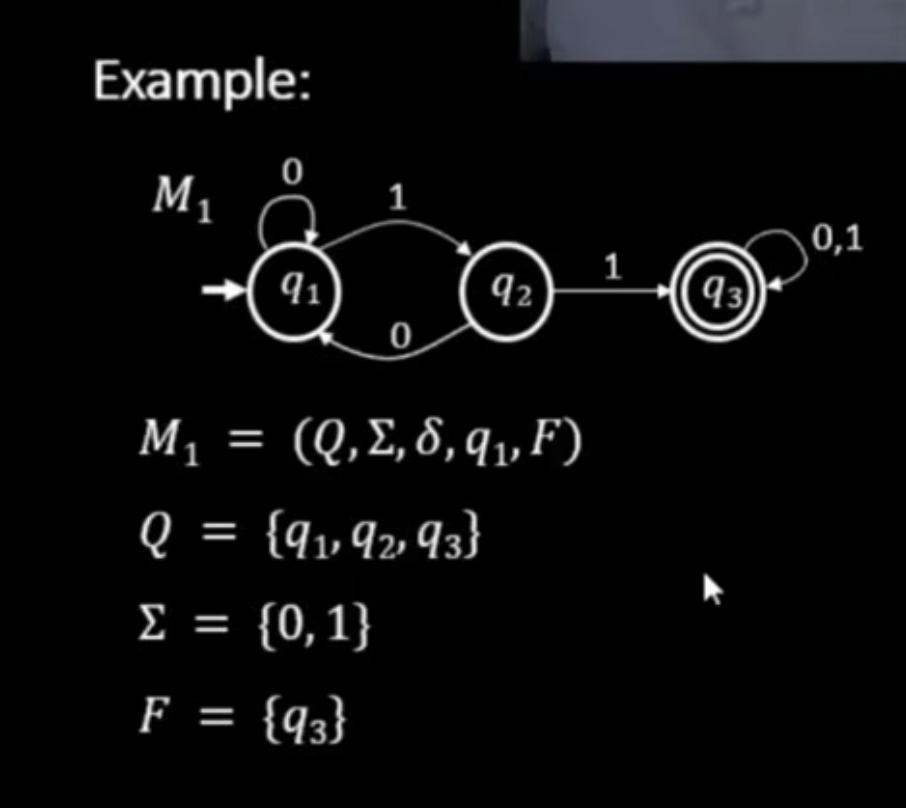
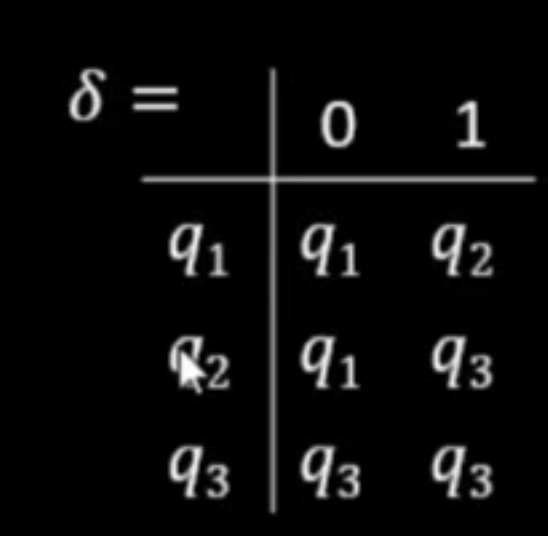
Transition function
Strings & Languages
- a string is a finite sequence of symbols
- a language is a set of strings(finite or infinite) - in our case just finite
- the empty string is the string of length 0
- the empty language is is the set with no strings
Acceptance
Def: accepts string each if there is a sequence of states where:
- for (this means that to get the state , we have to take the transition function of the previous state and the current symbol .
Regular Languages
Def: a language is regular if some finite automaton recognizes it.
Operations
- Regular operations: Let and be languages:
- Union: = which means the language is in either A or B
- Concatenation:
- Star:
Closure Properties
Theorem: if are regular languages, so is (closure under )
Proof:
Let recognize
Construct
M should accept input w if either or accept .
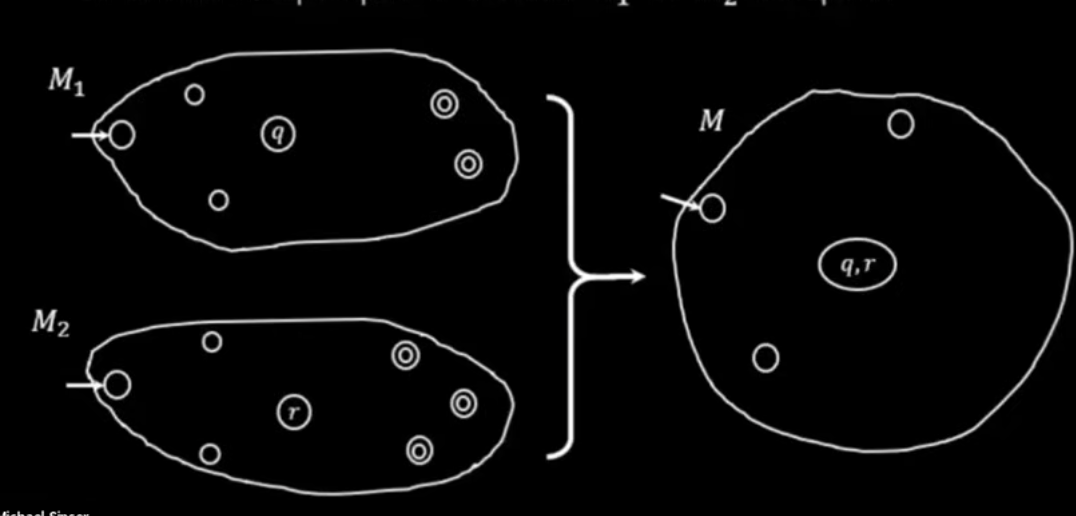
Components of M: : the set of states of is just the possible states of and : the starting state of is the starting state of and : the transition function of is basically the transition functions of and since tracks the states of both. so to get the ‘next state’ of we need the next states of and M_2 is their transition functions : the final state of is the union of the 1. all possible states of the, final state of and any state from . 2. all possible states of and the final state of .
Q: riddle me this:
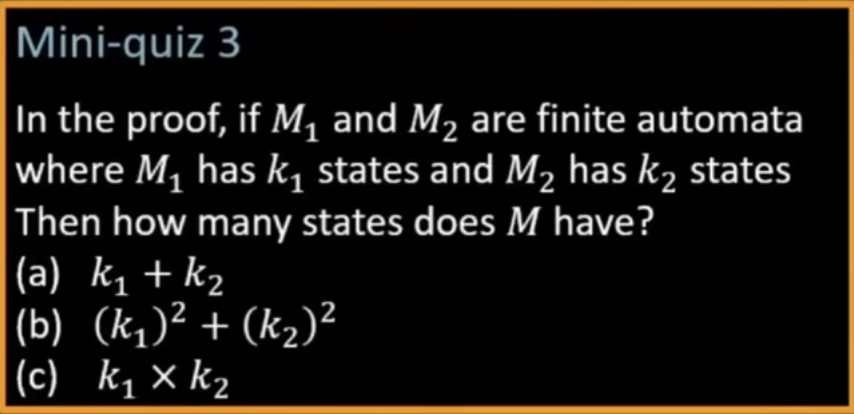
- the answer is C: because it’s all possible combinations of states from and